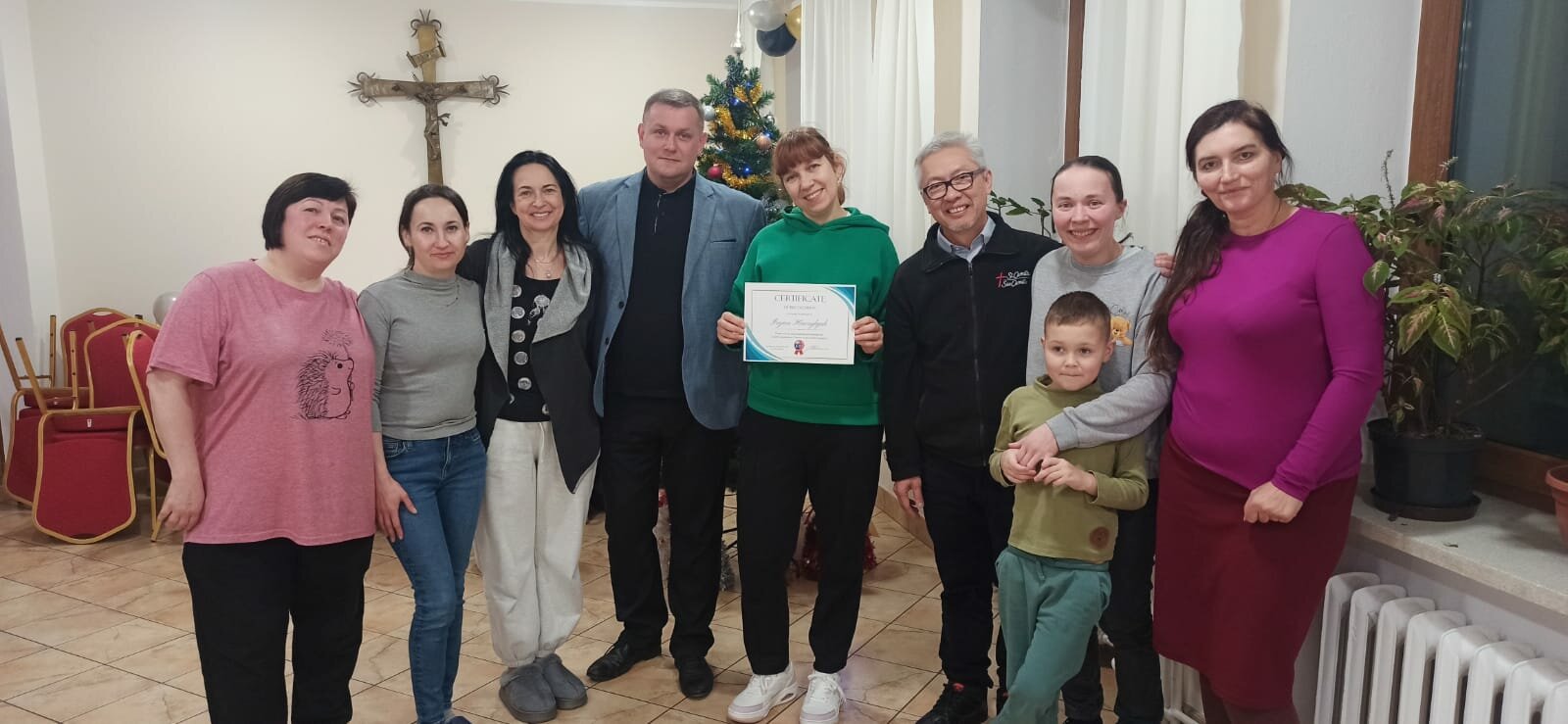
From 19 to 21 January 2026, CADIS Director Fr. Aris Miranda traveled to Poland for the 4th Quarter evaluation of the project “Strengthening Ukrainian Refugee Resilience (Phase 4)”. The goal was to assess the impact of the project on the direct beneficiaries.
Over the past year, the project has played a decisive role in supporting Ukrainian women refugees in Poland, rebuilding their professional lives, achieving economic independence, and strengthening their social integration. At the heart of these efforts was the Harna coworking space, which functioned not only as a workplace but also as a center for counseling, skills development, and empowerment.
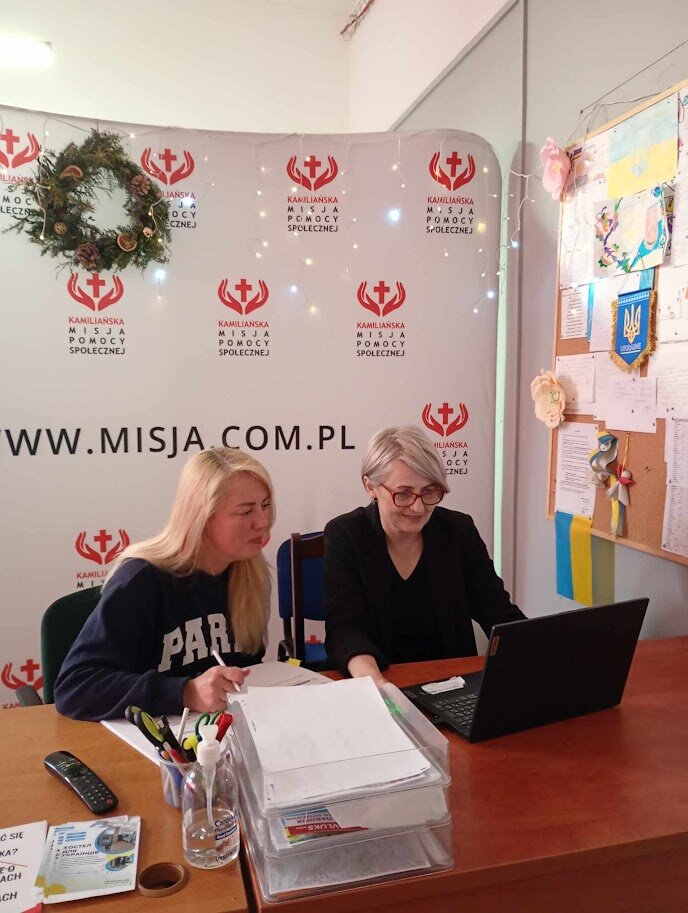
Access to a free career, legal, business, and accounting counseling proved critical. In the final quarter alone, Harna participants used advisory services 90 times, most often to better understand Polish employment regulations, contracts, and labor rights. Despite improved language skills, the complexity of Polish labor law remained challenging, making this support indispensable. Through individualized guidance, beneficiaries learned to distinguish between different forms of employment—employment contracts, contracts of mandate, contracts for specific work, and B2B cooperation—and to make informed decisions about their working conditions. As a result, all Harna participants now hold legal employment, and 25 individuals secured stable and decent jobs in sectors such as gastronomy, warehousing, cleaning, and especially beauty and hygiene services. Several women also returned to the project after earlier participation, seeking support to change jobs and improve their working conditions.
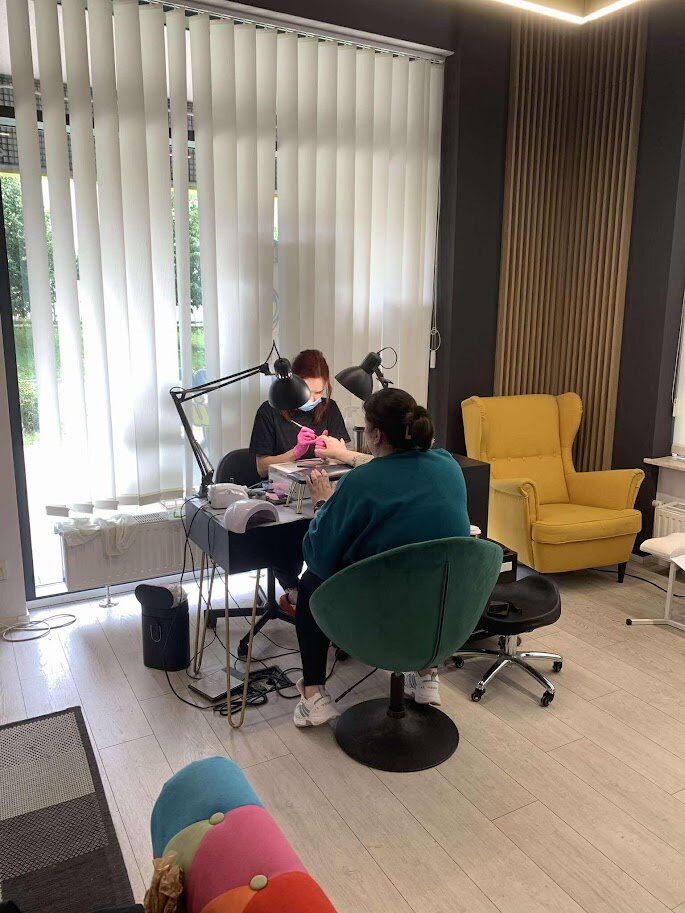
Alongside employment, the project strongly fostered entrepreneurship. In the fourth quarter of 2025, six Ukrainian women successfully transitioned to full self-management of their service businesses within the Harna coworking space. After months of training, workshops, and individual consulting, they now independently acquire clients, manage schedules, provide beauty and wellness services, maintain their workstations, and cover operating costs. They also meet all formal obligations, including tax filings and social insurance contributions. For these women, self-management marked a turning point—from uncertainty and dependence to confidence, stability, and integration into the Polish labor market.
Fiscal compliance was another key achievement. Ten women launched their own businesses in late 2025 and successfully navigated Poland’s tax and social security systems. They registered with the social security system, submitted monthly returns, paid contributions, and settled taxes under either income-and-expense bookkeeping or flat-rate taxation.
Accomplishing this in a new country, often with language barriers and limited prior experience, demonstrated both the women’s determination and the effectiveness of comprehensive, hands-on support. Beyond compliance, this process strengthened their sense of responsibility, financial literacy, and self-worth.
Improved Polish language proficiency (B1 or higher) significantly expanded beneficiaries’ independence and opportunities. Language skills enabled them to manage everyday matters, communicate with institutions, seek and change jobs, and build professional relationships. In the beauty sector, especially, speaking Polish allowed women to attract local clients, build trust, and stabilize their income. Language ceased to be a barrier and became a tool for social and economic participation.
While the project did not provide formal vocational accreditation, skills development workshops substantially increased employability and income potential. Participants enhanced technical competencies, adopted new beauty techniques, and developed digital and marketing skills essential for client outreach. Just as importantly, the workshops transformed self-perception: women began to see themselves not only as workers, but as entrepreneurs capable of growth and long-term planning.
Housing stability further supported mental well-being and security. All Harna participants live independently, supported through advisory assistance rather than direct housing subsidies, reinforcing autonomy. In semi-autonomous settings, shared spaces fostered community and mutual support, though they also revealed challenges related to conflict and group dynamics. The project also helped beneficiaries overcome barriers to healthcare and social services through information, translation, and administrative guidance.
Social integration efforts—community events, joint celebrations, and extracurricular activities—helped reduce stereotypes and build personal ties between refugees and local residents. Children developed a sense of belonging in Polish schools, and individual friendships emerged, illustrating the human impact of direct contact and shared experiences.
Strategically, cooperation between CADIS International and the Camillian Province of Poland proved effective, with clear communication and aligned goals. The growing independence of Harna users confirms the sustainability of the coworking model, while ongoing advisory support remains essential for newcomers. In a context of anticipated reductions in public support for refugees in Poland, the project stands as a resilient and adaptive response—one that empowers women not only to survive, but to rebuild their lives with dignity, confidence, and hope.