On March 28, 2025, a magnitude 7.7 earthquake struck Myanmar. It is estimated that about 3.5 million people are still displaced within the country. Ongoing hostilities between the government of the Myanmar Armed Forces (MAF) military junta and various non-state armed groups continue to cause displacement and increase protection risks. Since the end of May, intensified fighting has displaced over 110,000 people. Floods and landslides caused by the monsoons are further compromising humanitarian conditions, with at least 35,500 people affected.
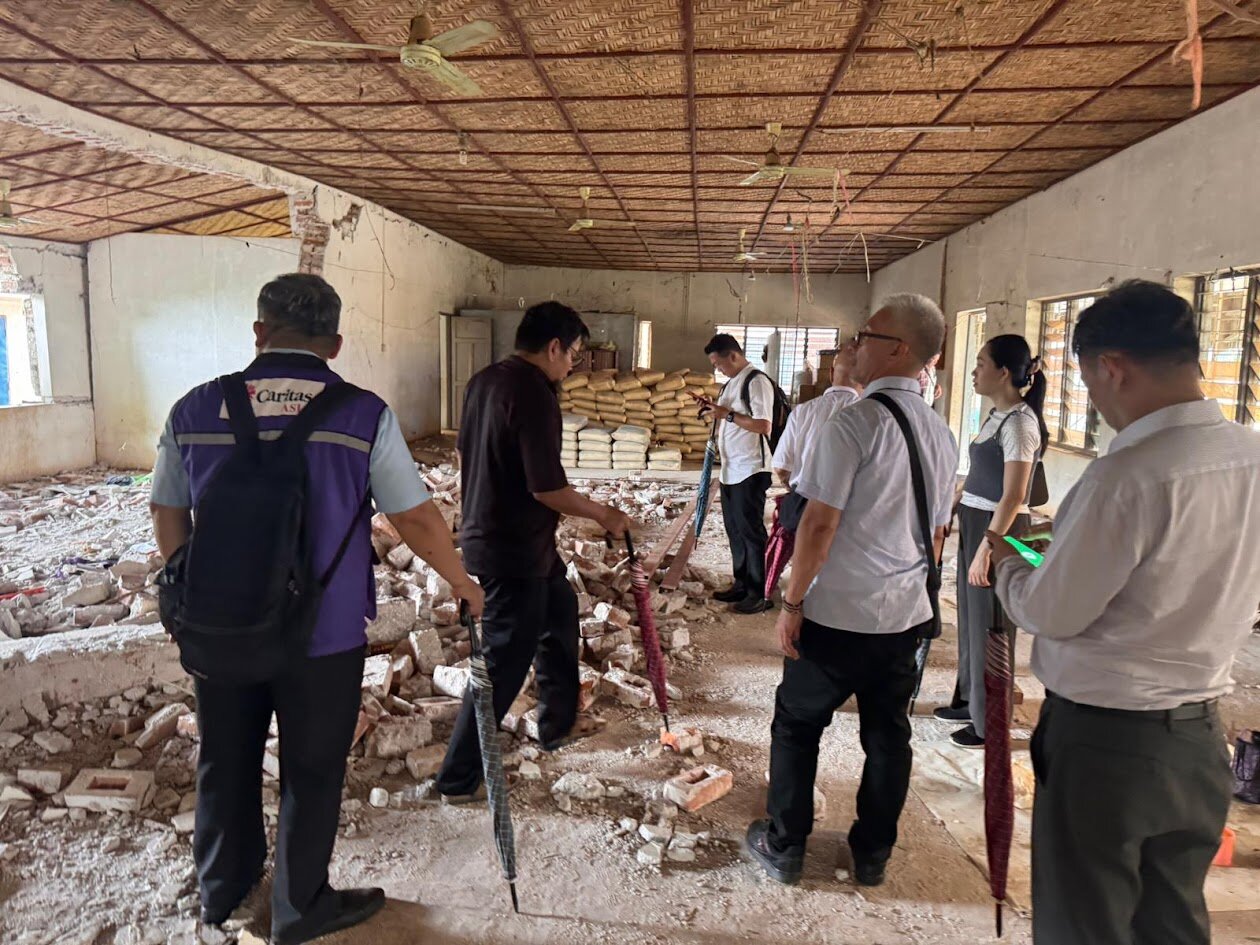
From July 7 to 10, CADIS International, CADIS, and Caritas Thailand conducted a needs assessment in villages near the epicenter in Mandalay district. The team was accompanied by staff from the Catholic Archdiocese of Mandalay. They were welcomed by the Archbishop of Mandalay, Msgr. Marco Tin Win.
CADIS and Caritas Thailand joined forces and carried out two relief missions. From April 21 to 23, CADIS Thailand began the first delivery of relief goods (food and non-food items) to populations affected by the Ban Klang earthquake, Mae Jae district, Roi Koh province, Myanmar, distributing 350 packages of relief goods (instant noodles, canned goods, cooking oil, basic medicines) and 100 sacks of rice.
The second relief mission took place on May 29-30, 2025. The diocesan Caritas of Chiang Mai, Caritas Thailand, and CADIS Thailand organized a new mission to assist our brothers and sisters in Myanmar, affected by the earthquake and ongoing unrest. After preparing packages with medicines, mosquito nets, blankets, and food, two teams set out.
The composite assessment team (Caritas Thailand, Diocesan Social Action of Chantaburi, CADIS Thailand, and CADIS International) set out for Mandalay, the second largest city in Myanmar. From the airport, they went directly to the Chanthagone displaced persons camp, which hosts 600 displaced people from villages in Sagaing, Mandalay, and Kachin. The displaced persons were not only survivors of the March earthquake, but also of ongoing armed conflicts in the country. The Catholic Church of Mandalay kept its premises and facilities open to host the displaced. However, essential facilities (schools, training center, church, and temporary shelters) and the perimeter fence were completely damaged by the March earthquake.
The internally displaced are of mixed faiths and local cultures (Catholics, Buddhists, and Muslims). Most of them are women and children.
With the support of donor organizations, reconstruction efforts at the camp are ongoing, focusing first on the school, the training center, and the perimeter fence, after the earthquake.
Although the children continue to study through alternative education programs, their studies are not recognized by the government and they are forced to take exams in local public schools, where they often feel isolated. The camp also receives support from nuns and volunteers who provide mental health and psychosocial services. A basic medical clinic operates on site, although resources are limited.
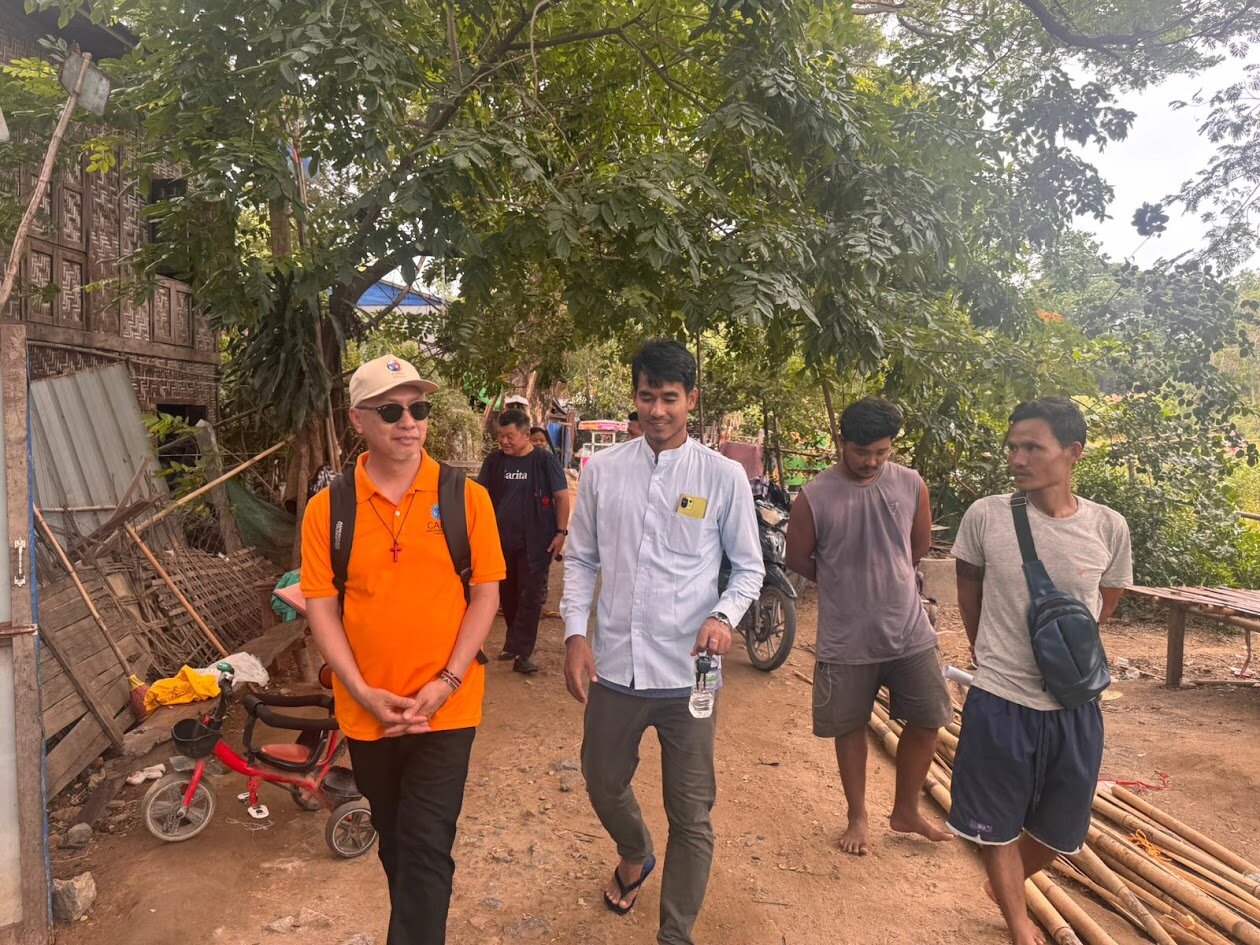
The following day, the team visited the clergy house, the cathedral, the parish of St. Francis Xavier and its clinic, which suffered severe structural damage. Services continue in an open hall, but with limited capacity. In addition, access for patients from the villages has been hindered by military movement restrictions.
.jpeg "whatsapp-image-2025-07-08-at-14.24.31-(1).jpeg")
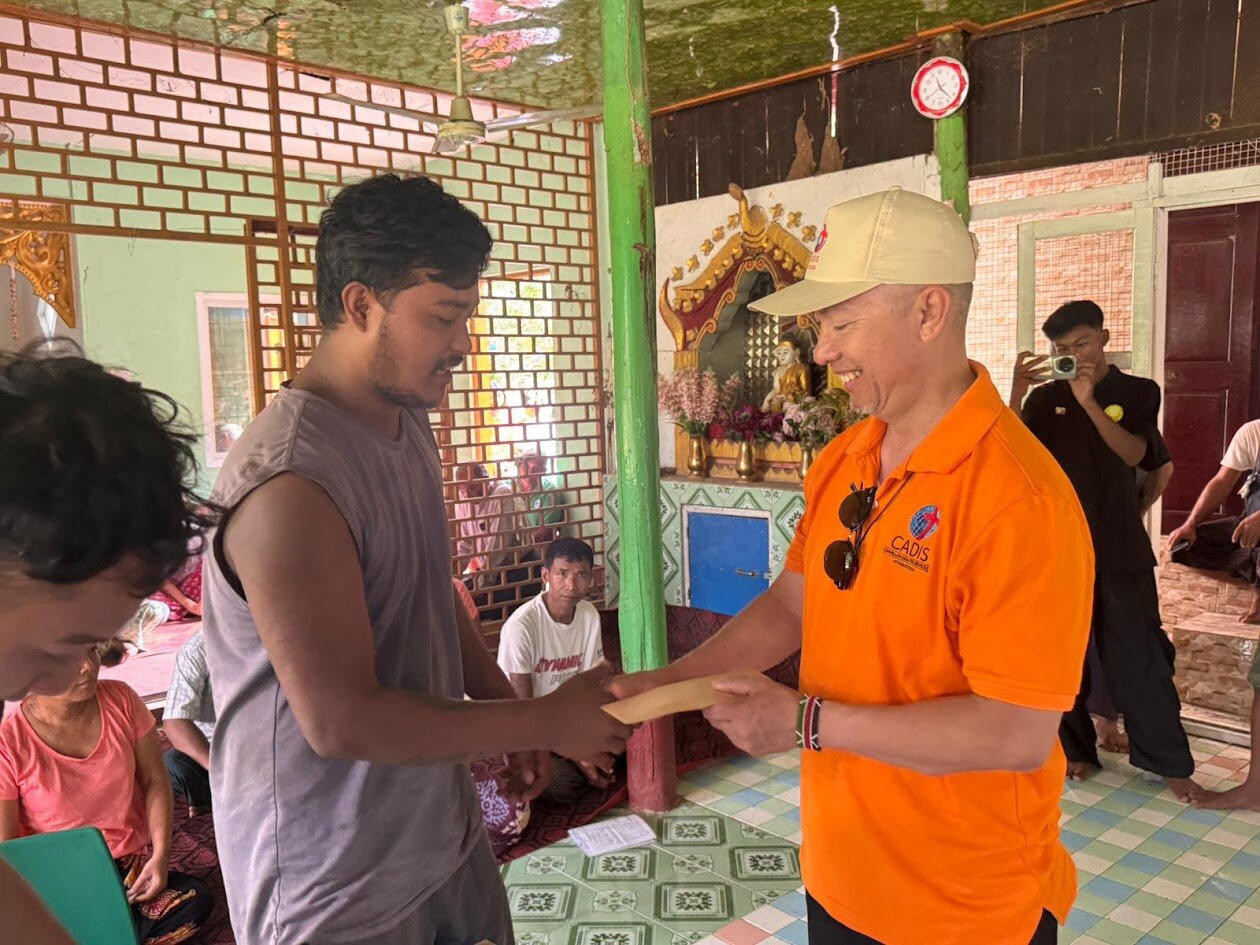
Subsequently, the group went to Amapura, on the border between Mandalay and Sagaing along the Irrawady River, where other internally displaced people are temporarily hosted in Buddhist temples and on public land. In collaboration with Buddhist authorities and MERT (Mandalay Emergency Rescue Team), the archdiocese is providing essential aid to hundreds of displaced people. That day, MERT carried out a cash distribution to more than 100 families. Some displaced people remain in the monastery premises, although most of them have returned home. MERT is preparing camps for flood victims during the monsoon season, from June to August. They are building new temporary shelters for the displaced. The situation remains disastrous, with overlapping emergencies (conflict, earthquake damage, and imminent floods) exacerbating fear, trauma, and instability.
The political climate in Myanmar further aggravates the crisis. International humanitarian organizations face restrictions or bans, and Burmese migrants abroad struggle to send aid home. The government discourages migration and enforces conscription laws, also pushing young adults into military service.
On the third day, the team visited some of the 18 parishes completely damaged by the earthquake. In the parish of St. Michael in Mandalay, 25 families remained in temporary shelters on the premises. Immediately after the earthquake, almost 100 families had been accommodated. The families interviewed described the fear and abandonment by the government, which forced others to return home to create the illusion of normality in the country.
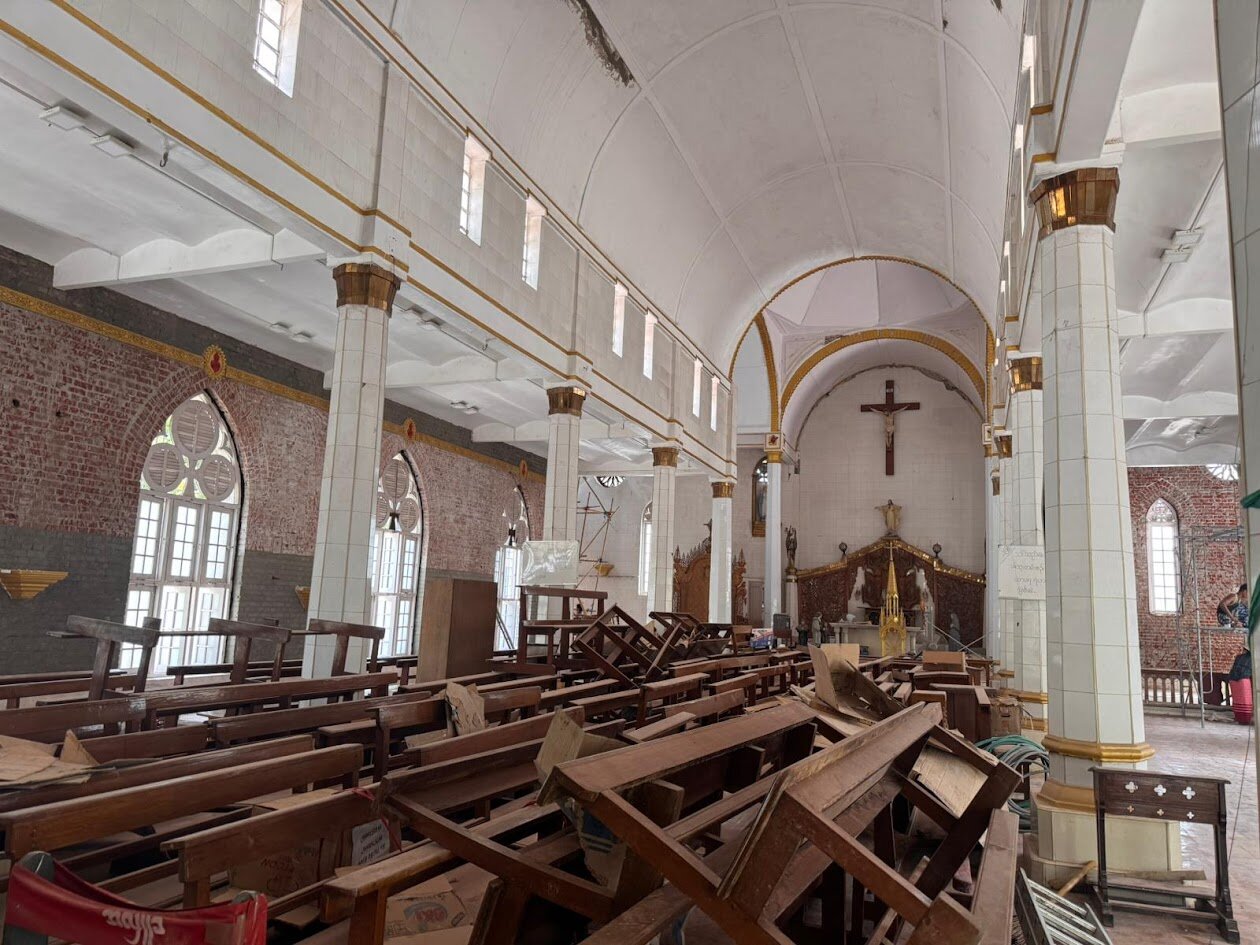
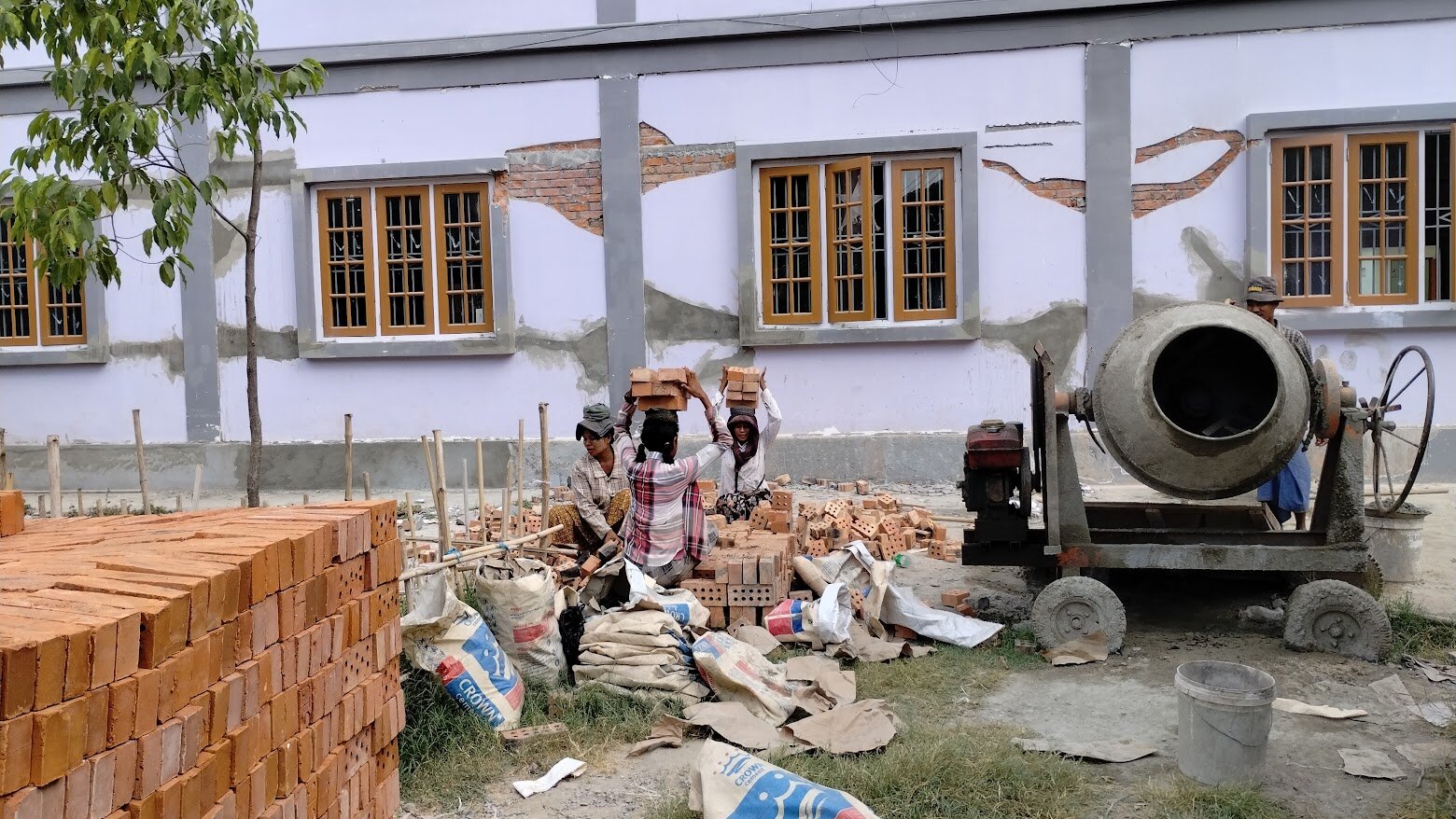
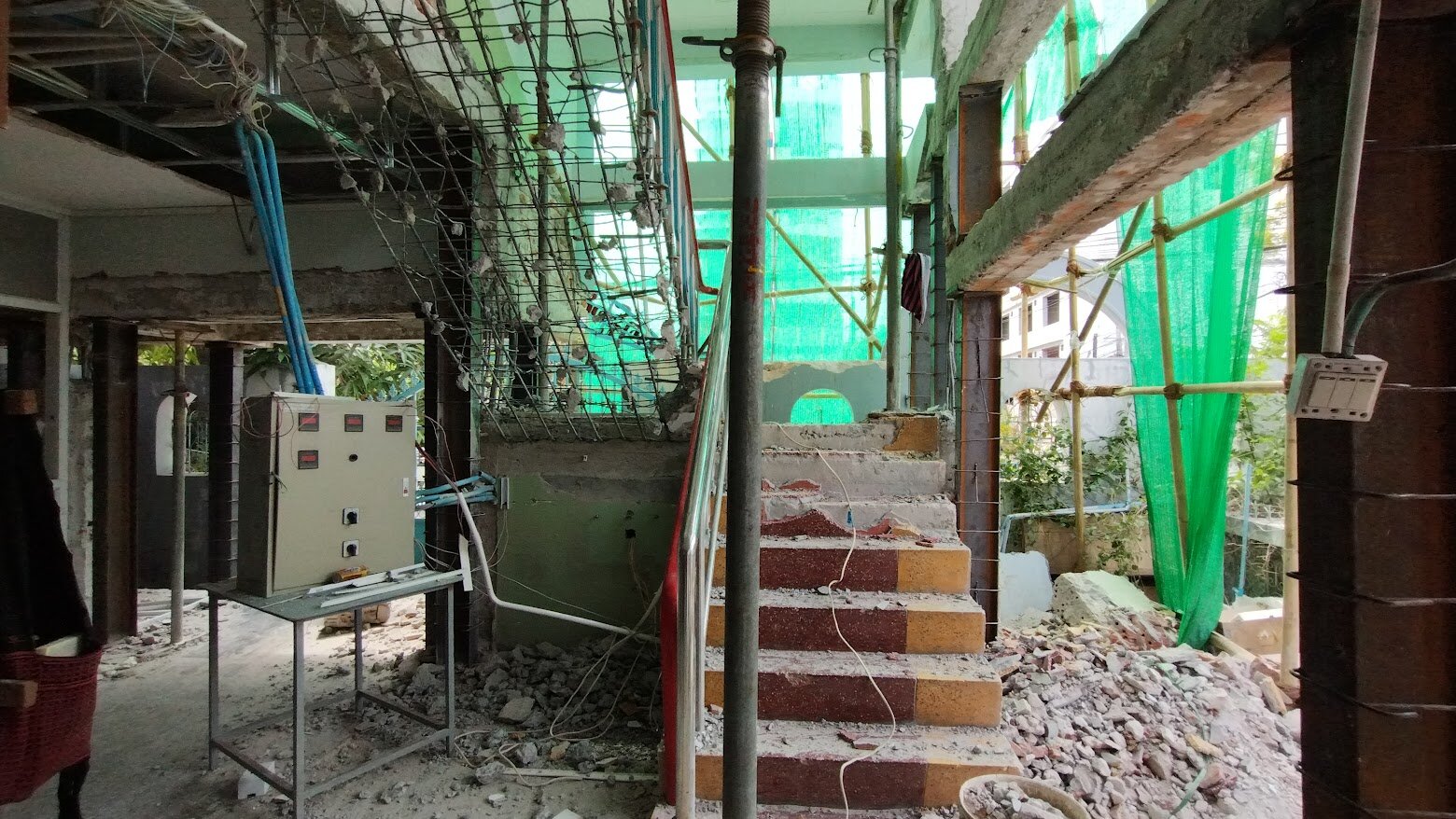
In the parish of St. Joseph in Lafon, historically known as a center for Chinese Catholics, the church suffered only minor damage and remained functional. The team then moved to the parish of St. Vincent de Paul in Zawgyi, a Catholic town known for dairy production. There the church had been completely destroyed and cleanup operations had just begun.
.jpeg "whatsapp-image-2025-07-08-at-14.24.53-(1).jpeg")
At the end of the assessment, some lines of action have been planned.
- Caritas Thailand and the Diocese of Chantaburi will organize a missionary appeal in this diocese to support the reconstruction of parish churches that have been totally or partially damaged. To date, 18 parish churches are no longer usable.
- Caritas Thailand, DISAC7, CADIS Thailand, and International will continue to support relief efforts in the Diocese of Mandalay.
- CADIS will facilitate the emergency relief program in collaboration with Missione Calcutta (Italy) for the students of the archdiocesan boarding school.
- CADIS International is developing a psychosocial facilitation program to support the archdiocese's initiative, particularly in the camps for displaced persons.
Thanks to the support of generous donors and institutions, it was possible to carry out the rescue operations. The need remains high and in the coming months, recovery and building resilience will be the main concerns, not to mention the psychological impact of this event. CADIS will continue to assist the survivors thanks to your support and prayers.
CAMILLIAN DISASTER SERVICE INTERNATIONAL FOUNDATION
Reason: Myanmar Earthquake
CC: INTESA SANPAOLO s.p.a.
IBAN: IT19G0306909606100000144767
BIC/SWIFT Code: BCITITMMXXX
or
CC: Banca Popolare di Sondrio
IBAN: IT03 M056 9603 2350 0000 3570 X95
BIC/SWIFT Code: POSOIT22
You can also support us through Paypal at the following link:
https://www.cadisinternational.org/come-puoi-aiutarci-dona-ora