Episode 2 - Svetlana
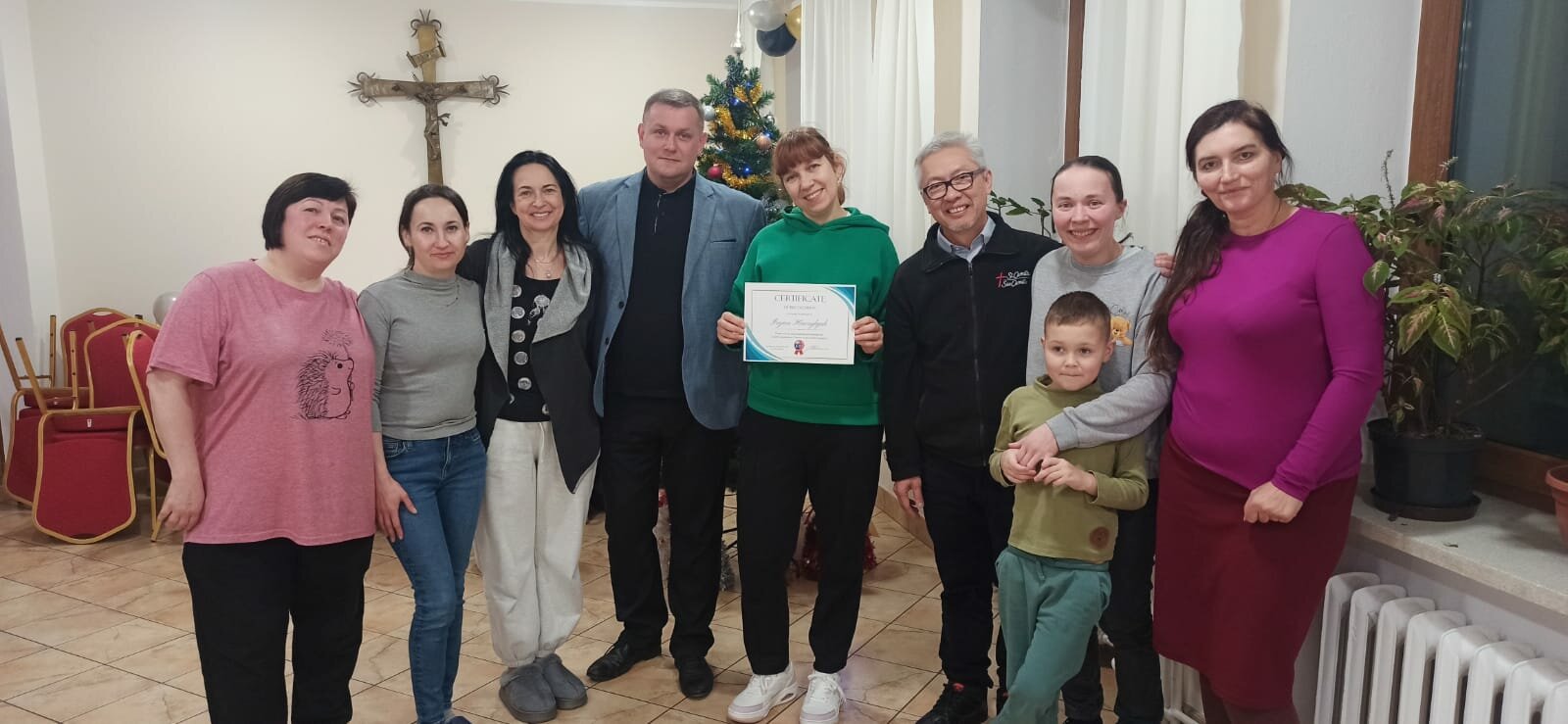
In this second episode we meet Svetlana, a Ukrainian psychologist fleeing the war who assists Ukrainian mothers and children in Lomianki.
The aspect of mental health is a very important and extremely delicate topic, especially when dealing with traumas linked to such strong events, like a war.
A fundamental part of the project, the psychosocial aspect also encountered reluctance and resistance from the refugees, but we have always tried to respect the will and timing of the people who, at different moments, felt comfortable sharing their emotions, both through group and individual sessions.

What are your first memories related to your arrival in Poland?
The first feelings after arriving in Poland in June 2022 with my daughters were of total confusion, lack of understanding of my future, and great pain for everything I had left at home. It was difficult to look at the sky where planes and helicopters were flying, because the sky in Ukraine seemed empty and silent from the first day of the war. It was also difficult to look at people living an ordinary life: walking, laughing, arguing, reconciling. It seemed that all this had lost its meaning. I simply had to survive.

What were the biggest difficulties and how were they overcome (or not)?
I took all the savings my husband and I had from home. They were supposed to last for a while (about 6 months), but I realized that the war would be much longer and I didn't have enough money. It was necessary to look for a job and a school for my eldest daughter, who was finishing third grade. It was the first days we were in Poland and the owner of the house we were staying in took me to the school and asked if there was a spot. My daughter was welcomed with great love and an open heart, for which I will always be grateful to her class teacher, who organized a warm welcome for her. That evening, my daughter joyfully showed us all the greeting cards drawn by the Polish children, which we still keep.
The second problem was finding a job. Not knowing the language, I didn't even know where to start. Added to this was the problem of my younger daughter, so I also had to find a job somewhere. But a coincidence helped me in this situation (in my opinion, God himself guided me all the time and up to now). The owner of the apartment told me that the Immaculate Sisters' kindergarten was accepting children from Ukraine. I was happy, because that way I would have time to look for a job. They accepted my daughter there and it turned out that I could be hired as a psychologist for a group of Ukrainian children. Fortunately, the Polish government allowed psychologists who graduated in Ukraine to work in the country. Since then I have changed several jobs, all related to projects for Ukrainians, I validated my degree (which means it corresponds to a Polish degree), I learned the language and received a state B1 certificate. I currently also work as a psychologist in a Polish foundation that deals with projects for foster families and people from Ukraine. I conduct corrective development lessons in the sensory integration room, working with Polish children from foster families and Ukrainian children from 2 to 18 years old and their parents. I have the opportunity to attend various training courses and conferences. I completed the instructor course for the Shantal Massage Method, the Level I sensory integration course, and I won't stop here.
Another problem was finding an apartment, because the landlord allowed us to stay with him only until the end of the summer and then we had to look for another house. When I saw the rental prices, I realized that I couldn't afford housing, food, and school on my own. At one point I was even about to go back home, but my husband refused to let me do it, because the situation at home was no longer safe; he also risked losing his job and being drafted into the Ukrainian forces. So, when I heard about the house of the Order of St. Camillus, where Ukrainians live, where a girl who worked at that time already lived, I asked her for a room there. They accepted us and this gave me hope for the future.
The smallest thing, but still a problem, was getting all the necessary documents in order, but I was always helped by good people and, once I learned the language a bit, I learned to solve most things on my own, and now it's no longer a problem for me.
How has the approach of Poles changed over the months compared to your first arrival in Poland?
For the first months of my stay in Poland, I felt great support and understanding from the locals. But as time went by it became clear that the situation was changing, there were more and more people who didn't care, and a year later you could already face open hostility. As a psychologist, I understood that these are natural processes, but the pain is no less. The fact that I met on my way a large number of truly kind and sincere people, who welcomed me and my children with open hearts and supported me at home and at work, helped me overcome this pain. I have colleagues among the Poles and they are my support.

What do you think about your current situation in Poland?
My current situation is as follows: the children go to school, have good grades, I work and it seems that I will be able to find a job with my specialization in Poland, even if there will be no funding from the Foundation. Thanks to the project, I have secured accommodation until the end of 2025 and I have the opportunity to save for the future. My husband has enlisted in the army and I can't count on him, so now I rely only on myself.
Apart from financial income, how does your work help you as a person?
The management of the foundation where I work is very positive towards me, I don't feel like I come from another country. We simply work together for a single purpose. I have the opportunity to realize my potential, I love working with people, helping and supporting others is a source of inspiration and strength for me. Sometimes it's difficult and tiring, but just a smile from a grateful mother, or a change for the better in at least one child entrusted to me, and I have the strength to move forward and live life to the fullest.

Can you tell us about an episode or a story that particularly touched you?
There have really been many stories. For me it's not about a story, but about a person, a mother with two children with autism. The boy is 7 years old and has a severe form of autism with mental disorders and the 8-year-old daughter with a mild form of autism, but even for her it's not easy. She doesn't have a husband and is here with her mother and children. They attend my classes. She doesn't have the opportunity to work, but she went to study at a school of politics, is learning Polish and is always kind and polite. When I look at this, I understand that I have no problems, that I can handle everything in the world, that you have to enjoy life and not forget to help those in need.
How do you look at your future and what is your feeling about the end of the war?
I look to the future with hope. I no longer focus on the end of the war. I wish everything would end, so my husband could come to us. We could work together and raise our children. It's a dream. But I focus on today and live by the principle of Theodore Roosevelt: “Do the best you can with what you have, where you are.”
You can find the previous episode HERE.