


On the night of August 14, 2021, a disastrous earthquake shook Haiti, followed by cyclone Grace which made operations even more difficult.
Despite the prompt intervention of humanitarian organizations and volunteers, even today many communities, such as the departments of Sud, Grand-Anse, and Nippes, remain isolated, and the risk of epidemics is increasing due to water scarcity and the difficulty of transportation reaching the most remote areas.
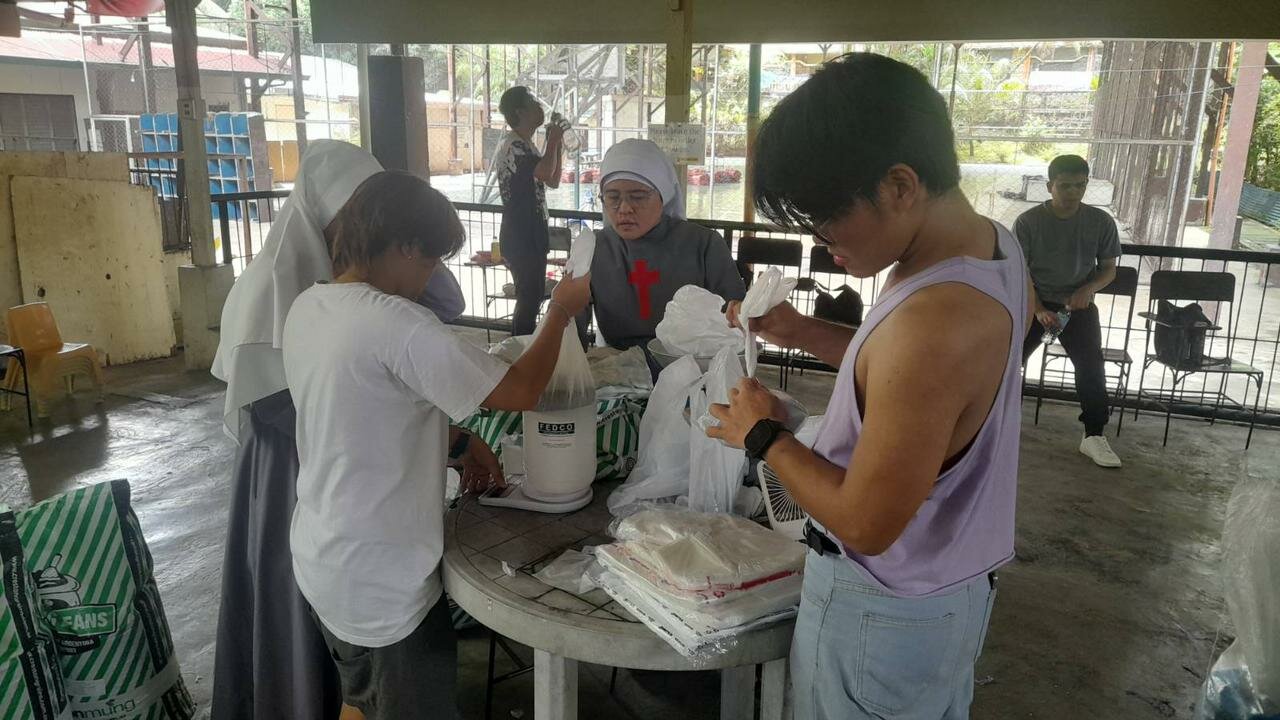
Father Robert Daudier, Director of the Saint Camille Hospital in Port-au-Prince, tells us about important missions carried out thanks to the mobilization of the Camillians, the Sisters Ministers of the Sick, and a team of over 20 operators including volunteers and medical staff, and more than 500 kits have been sent to the hardest-hit places in the South.
Specifically, the first mission was launched in the hardest-hit areas of Chardonnière, Lapointe, Presbyterian, Benèche, Portal, Marion, Charlemagne with the distribution of free medicines, blood sugar and health tests, personal hygiene kits, clothes, sheets, and about 250 food kits.
This was followed, with the same objectives, by the mission to Camp Perrin with the Parish of Saint Anne, which assisted 150 people in the areas of Tibi, Chanploi, Anba Kan, Brouette, Bananier, Rhe, Laporte, Carreau.
Finally, two other particularly needy places, a small area called Boisrond and Marceline, were reached by CADIS. Here too, the results were considerable and 204 patients received free medicines and medical tests; 400 food kits were distributed, as well as essential materials and goods.
Furthermore, CADIS has launched an important fundraising campaign to face the emergency, thanks above all to the valuable support of the Camillian Delegation USA and the German Camillian Province (Missionswerk der Kamillianer e.V.) which, together with numerous private donors, immediately responded to the call for mobilization for Haiti.
It is our duty, Father Robert Daudier reminds us, to show support to all the victims to help them overcome this difficult moment by helping them understand that they are not alone and no longer abandoned.
Now that the time of emergencies and first response is over, we must think about how to help some poor families rebuild a small house, how to help some schools have a space to open classes for the education of children after these difficult times. Psychosocial activities must be set up, especially in the hardest-hit areas and in the long term, to serve as therapeutic care for the population affected by the earthquake.


.jpeg "CADIS' response for Bohol and Negros affected by Typhoon Odette")
